Get benefits claimants back to work cleaning our filthy streets
Table Of Content
- Detoxifies and removes product buildup on the scalp
- Dos And Don'ts Of Hair Steaming
- What Is Hair Steaming? The Deep Treatment Natural Hair Gals Should Know
- How To Steam Your Hair?
- Post-steaming care
- Hair Steaming Is the Easy At-Home Treatment That Helps Your Hydrating Products Work Double-Time
- How often should I use a hair steamer?

However, if you have thin hair that lacks volume then you need to do this in moderation and at lesser temperatures. In this process, steam is applied to the hair and scalp for a fixed amount of time. The moist heat hydrates the hair shaft, opens up the cuticles, and allows for better absorption of oils, serums, or other hair care products.
Detoxifies and removes product buildup on the scalp
Remember in Grease, when Frenchy is serenaded to Beauty School Drop Out while women in shimmery silver negligees sway under giant heaters with rollers in their hair? This was exactly like that – except without the punchy musical number and with a pair of old black jeans and a T-shirt instead of the the snazzy nightie. (I also didn’t have rollers in my hair…) But except for that, exactly the same. Want to be the first to hear about the latest (and greatest) SHOP product drops, custom collections, discounts, and more? However, she advises that anyone with “active acne” should avoid the treatment until their skin has calmed, to avoid further inflammation.
Dos And Don'ts Of Hair Steaming
Using a hair steamer more than once a week can actually cause too much moisture, resulting in a weakened hair shaft. Once a week is a great rule to follow for moisture hair retention. When you use substandard oils, you miss out on a genuinely beneficial hair steaming session.
What Is Hair Steaming? The Deep Treatment Natural Hair Gals Should Know
The ultimate goal of our blogs is to make the reader well aware of skin and hair health, and enable them to take informed decisions. All content related to drugs, procedures, treatments, ingredients, and side effects are clearly indicated to the reader. People who have gout or other conditions that require them to limit protein intake should avoid collagen supplements. There isn't evidence from human studies that collagen taken orally will end up in one's skin, nails, or hair. But these do take longer to work, as supplements “must first be metabolized by the body and dispersed by the bloodstream to be beneficial,” says Dr. Shaver. And oral supplements may have more systemic side effects and interactions with other medications, so it’s especially important to check with your doctor before taking a supplement.
Can You Steam Your Hair at Home?
I was assured multiple times they would (eventually) grow back post-treatment. Luckily, my stylist, Meri Kate O'Connor (bless her and her patience), was able to help me out. Rinse your hair thoroughly and make sure that your scalp does not have any leftover shampoo or conditioner. Hair steaming allows your hair to absorb more moisture and become more elastic without any problem. (3) It has been observed that moisturization of the hair occurs at a higher temperature, which can lead to an increase in hair elasticity and shine. However it’s wise learning certain techniques from your stylist first.
New Japanese Head Spas in New York and Los Angeles Promise Healthy, Shiny Hair - Vogue
New Japanese Head Spas in New York and Los Angeles Promise Healthy, Shiny Hair.
Posted: Sat, 08 Apr 2017 07:00:00 GMT [source]
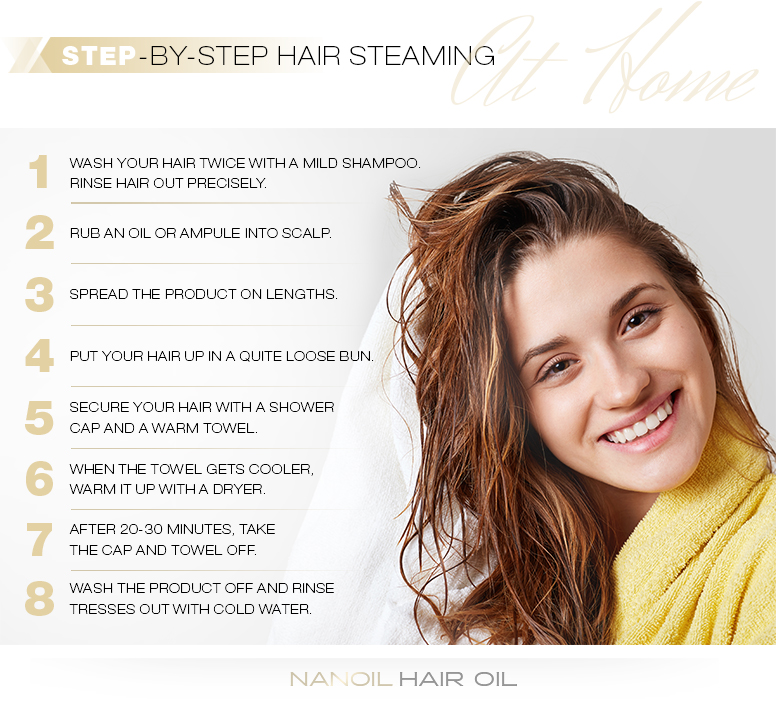
How To Steam Your Hair?

If you have a sensitive scalp or have just had a scalp or hair treatment. Mielle's Babassu Oil Mint Deep Conditioner infuses hair with protein and moisture to restore dry and damaged hair. This deep penetrating conditioner is made with complex amino acids from wheat, soy, and other natural ingredients that help restore moisture to damaged and dry hair. Moreover, hair steaming helps in getting rid of microbes and dirt, which is important as a healthy scalp is needed for healthy hair.
Post-steaming care
When she’s not writing about hair care, she enjoys gardening and petting all the lovely dogs that she meets. For those who like low maintenance hair care tools, this steamer may be the way to go. All you need to do is throw your hair in a shower cap and put the steaming hood on top. The hood is big enough to cover the edges of your hairline in the front and back and it evenly distributes steam throughout your hair. As a bonus, it has a remote where you can control the temperature according to your preference.
So it’s important to use moderation when incorporating this treatment into your hair care routine. (3) If you’re interested in trying out steaming your hair, it is recommended to do a patch test first on a small section of hair to see how your hair reacts. If you are steaming your hair the right way, you do not need to worry about damage. The excessive heat can damage your hair cuticles and also the protein that the hair is made of.
Increased elasticity makes it easier to style your hair with minimum tangles and breakage. Let the steam formed in between the shower caps work its magic on your hair while you sit and relax over a cup of tea or a favorite magazine! You can even use it a bit longer if you are looking for extra moisturization. Currently, no credible evidence supports the use of collagen for hair growth in humans. Studies on the effect of collagen supplementation on hair growth tend to be in vitro, on animals, or poor quality.
Steaming also works to open up the pores on the scalp which can in turn help with blood circulation. Proper blood flow is key to hair health, as well as helping to ensure new growth is possible. This process also aids in elasticity to safely stretch the hair.
While many salons offer steaming services, hair steaming is something you can also DIY. There are hair steamers on the market that operate similarly to a hooded dryer, as well as hand-held steamers for those who'd like to steam at home. This article is going to discuss the benefits of steam treatment for hair and explain how to do the process at home. The moist heat of the steam opens up the hair follicles and cuticles and penetrates them. People with dry and damaged hair, especially those with curly and kinky hair, can benefit the most with hair steaming.
Your hair cuticles will be pre-conditioned and ready for the manipulation that comes with wash day. Once hair steaming transforms your hair into the hair of your dreams, you will want to continue it as part of your hair care regime. Give your hair a regular boost with hair steaming once a month, and with this pampering routine, your hair is bound to become your crowning glory. If you are someone who is dealing with a lot of hair breakage and split ends then you need to incorporate hair steaming into your routine.
Rather than festering in their cells, they could be made to don orange jumpsuits and set to work. Obviously it wouldn’t have been successful on a Saturday night in Soho, but a carefully managed programme could have worked wonders by the plastic-strewn A34. Unfortunately, it all sounded too “Texan chain gang” for the Islington commentariat and the idea hit the buffers. Excuse me while I side-step steaming piles of rubbish and try not to tread on the remains of someone’s take-away.
If you have damaged or dull hair, steam it once a week, but if you have normal hair, steam once a month. As with any treatment, you should observe how your hair reacts in terms of dryness, elasticity, and shine, to gauge how your steaming ritual is impacting your hair's health. Carving out the time for regular steam treatments may very well help it thrive. If you have dry or damaged hair, consider using a hair steamer every 7 to 10 days. Not only does hair steam add moisture to the hair, but it also improves elasticity.
If you’re dealing with dryness or damage, hair steaming is the way to go. The steam coming off a hot shower can help treatments penetrate better, especially if you put on a shower cap after applying the treatment. Of course, keeping your shower running for an extra 20 minutes is going to use up a lot of water, so keep that in mind before making this a regular activity. If you have access to a gym or spa with a steam room, voilà, you have an easy method for a steam treatment right there; just shower, wash your hair, and apply your conditioning treatment before heading in. As a level up from a typical deep condition process, steaming your hair has many benefits that you may have never realized you needed to keep your hair in tip-top shape. While both deep conditioning and steaming are fantastic for maintenance, steaming has an important element that helps your strands go into overdrive.
After the treatment is complete, you can start hair steaming once a month to keep your scalp clean and to avoid any kind of scalp infection. Applying coconut oil that contains the goodness of onion will be more beneficial than just coconut oil. Onions are rich in sulfur, which helps in the regeneration of hair follicles on the scalp. Having porous and brittle hair strands can make you lose hope, but don’t worry because steaming and the use of moisture-rich products can improve your mane. High temperature has been shown to accelerate water penetration.


Comments
Post a Comment